Benefits of New Energy Sweeper Trucks for Urban Sanitation
Industry Background and Market Demand
Urban centers worldwide are facing growing challenges in maintaining clean streets and public spaces due to rapid population growth, increased vehicular traffic, and higher waste generation. Traditional diesel-powered street sweepers, while effective in debris removal, contribute to air pollution, noise, and greenhouse gas emissions. In response, municipalities and private sanitation contractors are increasingly adopting new energy sweeper trucks, including electric and hybrid models, to enhance environmental sustainability while maintaining operational efficiency.
The market for new energy sweepers is expanding as cities implement stricter emission standards and sustainability initiatives. Governments and urban planners are prioritizing cleaner, quieter street maintenance solutions to meet air quality targets, reduce carbon footprints, and comply with international environmental regulations. As a result, demand for electric or hybrid sweeper trucks is growing, creating opportunities for manufacturers and operators to optimize urban sanitation practices through advanced vehicle technologies.
Core Concepts and Key Technologies
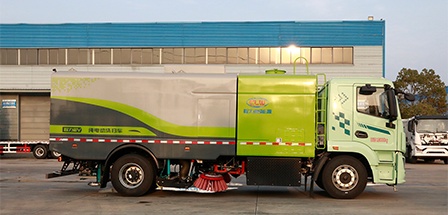
New energy sweeper trucks integrate several core technologies designed to maximize both cleaning efficiency and environmental benefits. The central concepts include electric propulsion, energy recovery, and smart operational control:
Electric Propulsion Systems: Fully electric sweepers use battery-powered motors for mobility and auxiliary operations, reducing reliance on fossil fuels.
Hybrid Powertrains: Hybrid models combine diesel engines with electric motors, optimizing energy usage and extending operational range while maintaining flexibility.
Automated Sweeping Systems: Advanced control systems regulate brush speed, vacuum power, and water spray to ensure efficient debris removal with minimal energy consumption.
Energy Recovery and Regeneration: Some systems capture braking energy or optimize battery recharge during idle periods to improve overall efficiency.
Emission Control and Noise Reduction: Electric operation eliminates tailpipe emissions and reduces noise, improving environmental and urban compliance.
These technologies collectively enhance operational efficiency, reduce environmental impact, and improve overall street cleaning quality.
Vehicle Structure, Performance, Materials, and Manufacturing
New energy sweeper trucks are engineered with robust yet lightweight materials to balance structural integrity with energy efficiency. Aluminum alloys, reinforced composites, and corrosion-resistant steels are commonly used in tank and chassis construction to extend vehicle lifespan while minimizing weight.
The sweeping system typically consists of rotating brushes, vacuum units, and water spray mechanisms, all powered by electric or hybrid systems. Brush materials are designed for durability on a variety of surfaces, including asphalt, concrete, and paved pedestrian areas. Vacuum and suction components are engineered to maintain consistent debris collection without excessive energy draw.
Manufacturing processes emphasize precision welding, corrosion-resistant coatings, and rigorous quality control for mechanical, hydraulic, and electrical systems. Battery packs, electrical wiring, and drive motors undergo extensive testing for thermal management, vibration resistance, and operational reliability under variable urban conditions. Suspension and braking systems are tuned to support both heavy payloads of collected debris and smooth operation on uneven city streets.
Key Factors Affecting Quality and Performance
Several critical factors determine the effectiveness, efficiency, and longevity of new energy sweeper trucks:
Battery and Powertrain Quality: Battery capacity, motor efficiency, and hybrid integration directly affect operational range and energy efficiency.
Sweeping System Design: Brush alignment, suction power, and water delivery systems influence debris collection efficiency and dust suppression.
Material Durability: Corrosion-resistant tanks and reinforced brush assemblies extend service life in challenging urban environments.
Vehicle Weight and Stability: Proper weight distribution ensures safety, maneuverability, and effective debris collection.
Maintenance and Serviceability: Accessible components and modular design reduce downtime and operational disruption.
Failure to address any of these factors may reduce performance, increase operational costs, or compromise safety and environmental compliance.
Supply Chain and Supplier Considerations
The production of new energy sweeper trucks depends on a reliable supply chain for batteries, motors, brush systems, sensors, and chassis components. Key considerations for supplier selection include:
Battery and Electrical Component Certification: Suppliers must provide high-quality, reliable batteries and power electronics that meet safety and performance standards.
Durable Mechanical Parts: Brush, suction, and water spray systems should come from reputable manufacturers with proven reliability.
Compatibility and Integration Capability: Suppliers need to ensure components work seamlessly with the vehicle’s overall control system and energy management software.
After-Sales Support: Spare parts availability, technical support, and training services are critical for long-term operational success.
A well-managed supply chain minimizes production risks and ensures that the final vehicles meet performance, efficiency, and safety standards.
Common Challenges and Industry Pain Points
Despite technological advancements, operators and manufacturers face several challenges in deploying new energy sweeper trucks:
Limited Battery Range: Fully electric sweepers may require frequent recharging for long shifts, affecting operational scheduling.
Higher Upfront Costs: Initial investment in electric or hybrid vehicles is higher than traditional diesel models.
Training Requirements: Operators must understand battery management, electric drive systems, and automated sweeping controls.
Maintenance of Hybrid Systems: Dual powertrains require specialized maintenance knowledge for both electric and combustion components.
Variable Debris and Environmental Conditions: Urban streets present diverse waste types and weather-related obstacles that can reduce cleaning efficiency.
Addressing these challenges requires careful fleet planning, operator training, and maintenance infrastructure.
Application Scenarios and Use Cases
New energy sweeper trucks are deployed in a variety of urban sanitation operations:
Municipal Street Cleaning: Electric sweepers are used in residential, commercial, and central business districts to maintain clean streets with low emissions.
Airport Ground Operations: Hybrid sweepers support terminal aprons and taxiways, minimizing noise and pollution near sensitive aircraft areas.
Industrial Parks and Logistics Centers: Battery-powered sweepers provide efficient cleaning while reducing environmental impact in large private facilities.
Event Venues and Public Spaces: Electric sweepers operate quietly and efficiently during events, ensuring minimal disruption to the surrounding area.
These applications demonstrate how new energy sweepers improve operational efficiency while aligning with sustainability and urban planning goals.
Current Trends and Future Directions
Several trends are shaping the development and adoption of new energy sweeper trucks:
Electrification of Entire Fleets: Municipalities are increasingly transitioning to fully electric fleets for environmental compliance and long-term cost savings.
Smart Operation and Automation: Sensors, telemetry, and route optimization software are enhancing energy efficiency and cleaning precision.
Lightweight and Durable Materials: Advanced alloys and composite materials reduce vehicle weight and energy consumption while maintaining durability.
Hybrid Energy Management: Integration of regenerative braking, energy recovery, and hybrid powertrains improves range and reduces operational costs.
Urban Sustainability Initiatives: Increasing regulatory pressure on emissions and noise is accelerating adoption of new energy sweepers.
These trends indicate that future Urban Sanitation Solutions will prioritize clean, efficient, and intelligent sweeping technologies.
Conclusion
New energy sweeper trucks are transforming urban sanitation by combining high-efficiency cleaning systems with environmentally responsible powertrains. Electric and hybrid sweepers offer significant advantages, including reduced emissions, lower noise pollution, improved operational efficiency, and long-term cost savings. By focusing on durable materials, advanced energy management, and operator training, municipalities and private operators can achieve cleaner streets, better air quality, and compliance with sustainability initiatives. As technology evolves and urban centers continue to grow, new energy sweepers will play a critical role in sustainable, effective, and safe street maintenance operations worldwide.



 WhatsApp
 Phone
Phone
Comment
(0)